






The Brisket Project

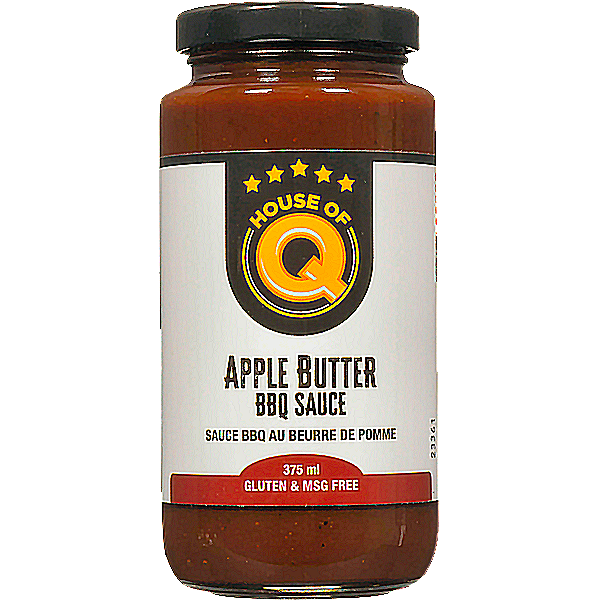
Click on the Jar

For Sauce Information

Sign Up For Our BBQ Newsletter!
* required fields
*

*

*

*
*

Email Marketing by VerticalResponse


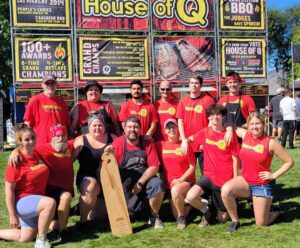
One of the four bbq competition categories that House of Q has challenges with, like many bbq teams, is brisket. One could easily argue that our trouble with this beefy meat is that we are not from Texas. On the other hand, one of the team members is from Alberta - the Canadian home of the best beef.

None the less, our best placing in competition for brisket is 12th out of 38 competitors. Not bad however it's not in the top three either.

So during the off-season we decided to practice our brisket skills and this page is dedicated to our brisket experiments. The whole point to this is to show you what we are doing, how we are doing it and the results we are getting. We will hide our top-secret recipes but the techniques will be front and center.

Date: November 25, 2006

Place: Coquitlam, BC Canada

The snow just started at 8 PM and the target was to get the brisket going at 9 PM for a 4-6 PM Sunday afternoon finish (smoke for 18-20 hours). This is a picture of my front yard with a WSM just getting going...

I purchased a 12 LB whole brisket that was nicely covered and marbled with fat. Once trimmed it was 10 lbs. On the top however I trimmed half of the top leaving the meat exposed while leaving the other half covered with a nice fat layer. This was to see what impact that will have on the finished product - rub adhesion, smoke ring development, effect of fat on juiciness....

After trimming the brisket I applied a mustard slather and a rub that we used in competition in September - there was still about 2 cups left. You can see in the picture the ridge of fat on the top part of the brisket.

I filled the kettle with 15 lbs of coal - enough to well above the coal ring at the bottom of the kettle. I lit around 8 briquette chunks and added a large chunk of aged white oak (about the size of four fists together).


It was on the smoker at 8:30 PM and the kettle temperature was 240F at the vent. The meat was 48 F. At 11 PM I checked it and the kettle was 250 F (gotta love these Webers for consistency) and the meat was already at 151 F - higher than what I anticipated especially after only 3 hours.

The outside temperature was dropping as it started snowing. When I started the outside temperature was around 34 F, around 28 F at 2 AM and around 30 F in the morning. Wind was strong at times however not impacting any of the cooking experience.

Throughout the evening and into the morning the kettle remained around 250 F at the vent. I checked the water tray and it was fine - added a half gallon (2L) around 6 AM. I basted with a mixture of apple juice and maple syrup twice through the evening.

The brisket temperature stayed at the 160 F mark for nearly 7 hours until 7-8 AM when it finally started to move upward again. When it broke 178 F after 12 hours of cooking, I needed to make some decisions...

The snow continued through the night and periodically I needed to remove the accumulation of snow on the top of my tent. I didn't want it to collapse on my experiment!

Since I was way ahead of the game and the brisket finished much earlier than I anticipated, I decided to pull it off of the smoker and hold it in a 170 F oven till we ate later in the day. It was NOT WRAPPED but resting in a large tray covered with foil.

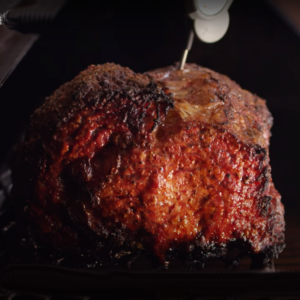
The result was a brisket that had a crisp bark but this aspect wasn't really the focus of the experiment - the meat and fat and ring were the focus... (the chewed up end you see in the picture is from it sticking, yeah that's it, to the grate rather than someone eating and testing while it was cooking. I'm sure you've experienced your brisket sticking as well, right?)

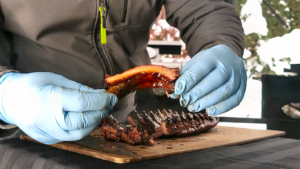
I separated the point from the flat and sliced each across the grain. The point is at the bottom of the picture while the flat is at the top.

The rub stuck on the meat very well but was rather mushy when it was on top of fat rather than meat. Interestingly though was there was NO RING where there was a layer of fat - only where the smoke and rub had direct contact with the meat.

In this picture you can see the softness of the fat, the fat on the surface - specifically what happens to it after smoking and making a decision should I trim the fat off or leave it on...

As well, you can see the development of the smoke ring - overall the ring is there however rather light. This is likely from the short amount of time (3 hours) it took for the brisket to get above 140 F where smoke ring stops.

The flat was juicy, solid from a pull-test point of view but slightly over-cooked. It did rest for a number of hours which would contribute to the over-doneness but overall, rather tender.
Now this was definitely my first ever attempt to smoke while it was snowing. For some of you reading this you might think, yeah whatever... while others might be thinking, I could do that... while some of those in the south might be thinking 'it's Canada, why wouldn't it be snowing?' Well, for greater Vancouver it snows only once or twice a year and that only lasts on the ground for a day or two - usually. In the midst of my smoking experiment it snowed 10 inches overnight and let up for a bit (enough for me to clean up) then continued once again... ugh. Here's a picture of my front yard after cleaning up. Note the snow on the top fence.

. BBQ Sauce . Recipes . News, Events & Classes . Gallery . Links . About . Home . Contact .

Copyright 2008 House of Q 

Place for Your BLUETOOTH barbeque!
Canadian electronics store